

Few developments in the crypto space have captured mainstream
attention the way NFTs have. In 2021 alone, the global NFT
market surpassed $17 billion in trading volume — up from roughly
$82 million the previous year. Celebrities, sports leagues,
musicians, and Fortune 500 brands all rushed to launch
collections, and individual pieces sold for tens of millions of
dollars at major auction houses.
Source: DappRadar — NFT Market Report 2021
Yet behind the headlines and the hype, the underlying technology
is genuinely significant. NFTs introduced a new way to establish
verifiable, tamper-proof ownership of digital items — something
that was technically impossible before blockchain existed.
This guide explains what NFTs actually are, how they work
technically, where the concept came from, what they are being
used for today, and what risks and opportunities exist for
anyone looking to understand or participate in the NFT space.
NFT stands for Non-Fungible Token. To understand what that means, it helps to start with the word "fungible."
Something is fungible when one unit is interchangeable with another of equal value. A $10 bill is fungible — you can swap it for any other $10 bill and end up with exactly the same thing. One Bitcoin is fungible — trading it for another Bitcoin leaves you with identical value.
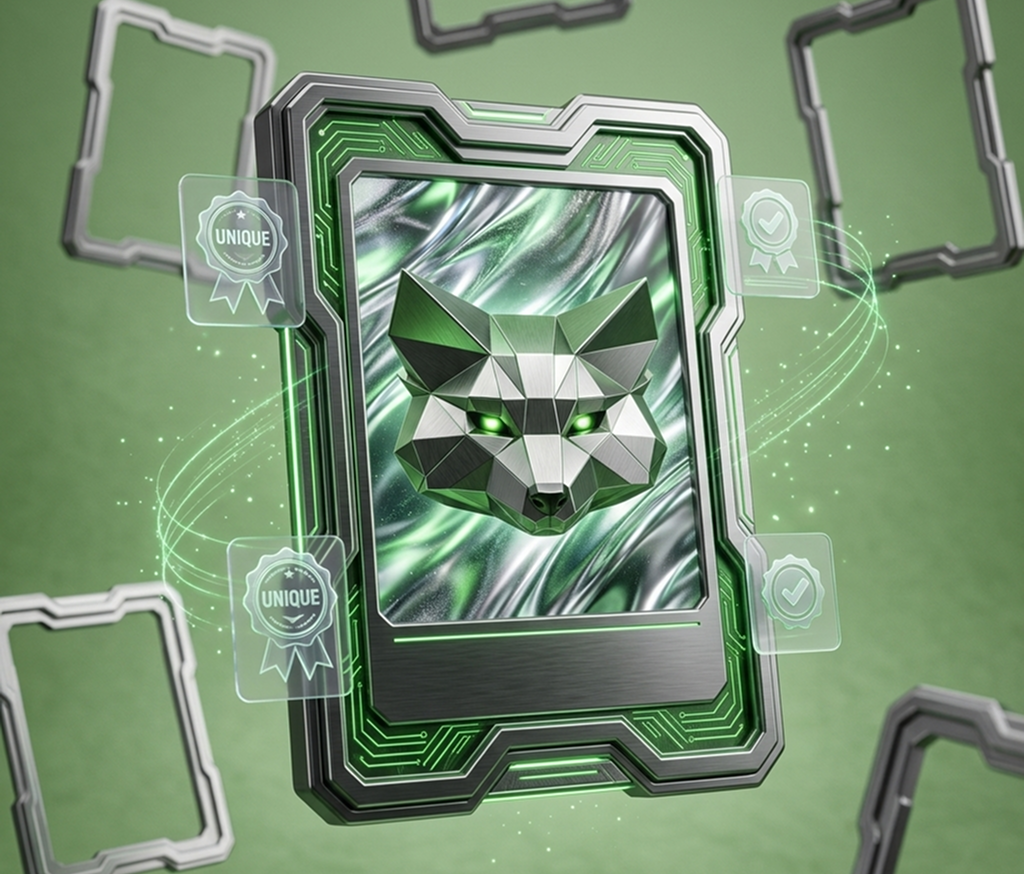
Non-fungible means the opposite: each unit is unique and cannot be exchanged on a one-to-one basis. A painting is non-fungible — there is only one original, and swapping it for a different painting does not give you the same thing. An NFT applies this concept to digital items.
Technically, an NFT is a unique digital token stored on a blockchain that certifies ownership of a specific item or piece of content. That item can be a digital image, a video clip, a piece of music, an in-game asset, a domain name, an event ticket, or virtually any other digital file. Source: Ethereum.org — NFTs
| Property | Cryptocurrency (e.g. ETH) | NFT |
|---|---|---|
| Fungibility | Fungible — each unit is identical | Non-fungible — each token is unique |
| Interchangeability | 1 ETH = 1 ETH at all times | Each NFT has distinct metadata and value |
| Divisibility | Can be split into fractions | Typically indivisible (whole token) |
| Primary use | Medium of exchange, store of value | Proof of ownership, collectibles, access |
| Token standard | ERC-20 (Ethereum) | ERC-721 or ERC-1155 (Ethereum) |
A useful real-world analogy: cryptocurrency is like money, where any note of the same denomination is equivalent. An NFT is more like a signed original painting or a specific seat number at a concert — each one is distinct and its value is tied to its individual characteristics and provenance.
NFTs are built on top of blockchain technology and rely on three core components to function: token standards, smart contracts, and on-chain ownership records.
A token standard is a set of rules that defines how a token behaves on a given blockchain — how it is created, transferred, and identified. The most widely used NFT token standard is ERC-721, introduced on the Ethereum network. It ensures that every token issued under the standard has a unique identifier, making duplication impossible. Source: Ethereum.org — ERC-721 Standard
A second standard, ERC-1155, allows a single smart contract to manage both fungible and non-fungible tokens simultaneously — useful for gaming applications where a collection may include both unique characters (non-fungible) and consumable in-game items (fungible). Source: Ethereum.org — ERC-1155 Standard
When an NFT is created (a process called minting), a smart contract is deployed on the blockchain. This is a self-executing piece of code that permanently records the NFT's unique attributes, its creator, and the conditions governing its use and transfer — including any royalty percentage the original creator receives each time the NFT is resold.
Every subsequent sale or transfer of the NFT updates the ownership record on the blockchain automatically, without requiring any intermediary — no gallery, no broker, no clearinghouse. Source: Ethereum.org — Smart Contracts
Owning an NFT means holding the private key to a wallet address that the blockchain recognises as the current owner of that specific token. The complete ownership history — every wallet that has ever held the NFT — is permanently recorded and publicly verifiable on the blockchain.
This creates something genuinely new in the digital world: provenance. In the physical art market, provenance refers to the documented history of a work's ownership — a major factor in determining authenticity and value. NFTs make provenance automatic, transparent, and impossible to falsify.
It is important to note a common point of confusion: owning an NFT does not automatically grant copyright over the underlying artwork or content. Unless explicitly transferred in the smart contract terms, the creator retains the intellectual property rights. What the buyer owns is the token — the verifiable certificate of ownership — not necessarily the right to reproduce or commercialise the work. Source: CoinDesk — NFTs and Intellectual Property
NFTs did not appear overnight. Their development spans over a decade and traces directly through the evolution of blockchain technology itself.
The earliest precursor to NFTs is often cited as Coloured Coins, a concept proposed around 2012–2013 on the Bitcoin blockchain. The idea was to mark specific satoshis (the smallest unit of Bitcoin) with metadata that assigned them a distinct identity and purpose — effectively making them non-fungible. The technology was limited by Bitcoin's scripting language, but the conceptual seed was planted. Source: Andrew Steinwold, Medium — The History of NFTs
NFTs as we know them today took shape in 2017 with two landmark projects on the Ethereum blockchain.
CryptoPunks, created by Larva Labs, released a series of 10,000 algorithmically generated pixel-art characters. Each punk is unique, verifiably owned on-chain, and freely tradeable. At their peak in 2021, individual CryptoPunks sold for millions of dollars, and the collection remains among the most recognisable in NFT history.
CryptoKitties, built by Dapper Labs, allowed users to collect, breed, and trade unique virtual cats. It became so popular that it temporarily congested the Ethereum network — an early demonstration of just how significant NFT demand could become. Source: Dapper Labs, Larva Labs
NFTs exploded into mainstream consciousness in early 2021. Digital artist Beeple sold a single NFT — a collage of 5,000 daily artworks titled Everydays: The First 5000 Days — at Christie's auction house for $69.3 million, the third-highest price ever achieved by a living artist at auction. Source: The New York Times, Christie's
Collections including the Bored Ape Yacht Club and Azuki reached floor prices of hundreds of thousands of dollars. NBA Top Shot brought sports highlights on-chain. Twitter enabled NFT profile pictures. Total market volume for the year exceeded $17 billion. Source: DappRadar
NFTs exist on blockchains, and the choice of blockchain affects an NFT's fees, speed, environmental impact, and the wallets and marketplaces that support it.
Ethereum is the blockchain on which the vast majority of high-value NFTs have been issued. Its ERC-721 and ERC-1155 standards are supported by virtually every major NFT marketplace and cryptocurrency wallet, making it the most accessible choice for creators and collectors. Source: Ethereum.org
Since Ethereum's transition to Proof of Stake in September 2022 (The Merge), the network's energy consumption dropped by approximately 99.95%, addressing one of the primary environmental criticisms previously levelled at NFTs. Source: Ethereum.org — The Merge
Several other blockchains have developed thriving NFT ecosystems, each with distinct advantages:
- Solana: Offers very low minting and transaction fees (often less than $0.01) and fast confirmation times. Home to major collections including DeGods and y00ts. Source: Solana Foundation
- Polygon: An Ethereum Layer-2 network that significantly reduces gas fees while maintaining Ethereum compatibility. Widely used for gaming NFTs and lower-cost collections.
- BNB Chain: Binance's blockchain supports NFTs through the BEP-721 standard, with lower fees than Ethereum mainnet and deep integration with Binance's ecosystem.
- Flow: Developed specifically for digital collectibles and gaming by Dapper Labs (creators of CryptoKitties). Powers NBA Top Shot and NFL All Day. Source: Dapper Labs — Flow Blockchain
NFTs are most commonly associated with digital art and profile picture collections, but the underlying technology supports a much wider range of applications.
NFTs solved a fundamental problem for digital artists: how to sell a unique original in a medium where anything can be copied infinitely. By minting an NFT, an artist creates a verifiable original — one that can be bought, sold, and resold with full provenance, and with smart contract royalties flowing back to the creator on every secondary sale.
Major auction houses including Christie's, Sotheby's, and Phillips have all held dedicated NFT auctions. Artists like Beeple, Pak, and XCOPY have each generated tens of millions in NFT sales. Source: Christie's, Sotheby's
Musicians have used NFTs to release exclusive albums, offer fans unique experiences, and distribute royalties more transparently. Kings of Leon became the first major band to release an album as an NFT in 2021. Artists including Eminem, Snoop Dogg, and 3LAU have all explored NFT-based music releases and merchandise.
For the music industry, NFTs present a model in which artists can monetise their work directly, without labels or streaming platforms taking the majority of revenue.
Gaming is one of the most promising long-term use cases for NFTs. When in-game items — characters, weapons, land, or skins — are issued as NFTs, players truly own them. They can be traded on open markets, used across multiple games that support the same standard, or sold for real-world value.
Axie Infinity pioneered the "play-to-earn" model, allowing players to earn tokens and trade NFT characters for real income — a model that became economically significant in parts of Southeast Asia during 2021. The Sandbox and Decentraland have created virtual worlds where land parcels are NFTs that can be bought, developed, and sold. Source: Axie Infinity, The Sandbox, Decentraland
NFT-based event tickets eliminate fraud, enable transparent resale markets, and give organisers the ability to earn royalties on secondary sales. They can also be programmed to unlock post-event perks — exclusive content, future access, or community membership — creating ongoing utility beyond the initial purchase.
The Bored Ape Yacht Club is the most prominent example of an NFT functioning as a membership token, granting holders access to exclusive events, merchandise, and community benefits.
NFTs can represent ownership of physical assets — real estate, luxury goods, commodities, or intellectual property — bringing the benefits of blockchain (transparency, programmability, and global transferability) to traditionally illiquid markets. Source: Binance Academy — Asset Tokenisation
NFTs have attracted significant criticism alongside their popularity. Understanding the risks is essential before participating in the space.
Before Ethereum's Merge in September 2022, the network used Proof of Work, a consensus mechanism that required substantial energy consumption. Critics pointed to the carbon footprint of minting and trading NFTs as environmentally irresponsible.
Since Ethereum's transition to Proof of Stake, the network's energy use dropped by approximately 99.95%. NFTs minted on Ethereum today have a vastly smaller environmental footprint than those created before the upgrade. Source: Ethereum.org — Energy Consumption
Owning an NFT does not automatically confer copyright over the underlying content. Several high-profile cases have illustrated this ambiguity — including situations where NFTs of artworks were minted without the original creator's permission, and disputes about what rights buyers actually receive when purchasing an NFT.
Before purchasing any NFT, buyers should review the smart contract terms carefully to understand exactly what rights are being transferred. Source: CoinDesk — NFTs and IP Rights
The NFT market has seen significant fraudulent activity, including:
- Rug pulls: Project creators launch an NFT collection, build community hype, collect sale proceeds, and then abandon the project entirely — leaving buyers with worthless tokens and no recourse.
- Wash trading: Artificially inflating the apparent trading volume and floor price of a collection by buying and selling between wallets controlled by the same party.
- Phishing and wallet draining: Malicious actors create fake NFT mint sites or send deceptive links via Discord and Twitter, tricking users into connecting their wallets and approving transactions that drain their assets.
Safety practices: Always verify NFT projects through official channels before minting. Never connect your primary wallet to unverified sites. Use a hardware wallet or a dedicated "hot" wallet with limited funds for NFT activity. Research the founding team's track record before purchasing.
NFT prices are highly volatile and speculative. Collections that traded at floor prices of hundreds of ETH in 2021 have in many cases lost over 90% of their peak value. NFTs should be treated as high-risk, speculative assets — not as stable stores of value. Source: Chainalysis — NFT Market Analysis 2023
Despite the significant market correction from 2021 highs, the underlying technology continues to evolve and find new applications. Several developments are shaping where NFTs go from here.
- Real-world asset tokenisation: Platforms are actively developing frameworks to tokenise physical assets — property deeds, luxury goods, fine art — on blockchain, using NFTs as legally recognised ownership certificates. Several jurisdictions are beginning to explore the legal infrastructure required to support this. Source: Binance Academy
- Soulbound tokens (SBTs): A new category of non-transferable NFTs proposed by Ethereum co-founder Vitalik Buterin — tokens tied permanently to a single wallet to represent credentials, achievements, or verified identity attributes that cannot be sold. Source: Vitalik Buterin — Decentralised Society Paper
- NFT-gated experiences and loyalty programmes: Brands are increasingly using NFTs as access tokens for exclusive experiences, product drops, and community membership — creating ongoing utility and customer engagement beyond a single transaction.
- Interoperability across games and metaverses: Industry efforts are underway to allow NFT assets to function across multiple platforms and virtual environments — so a weapon earned in one game could theoretically be used in another.
- Improved legal and regulatory frameworks: Regulators in the EU, US, and Asia are developing clearer rules around NFT classification, taxation, and intellectual property — which is expected to improve market integrity over time.
- An NFT is a unique, non-interchangeable digital token stored on a blockchain that certifies verifiable ownership of a specific item or piece of content.
- Unlike cryptocurrencies, no two NFTs are identical — each has distinct metadata, identity, and value determined by the market.
- NFTs are powered by smart contracts and token standards (ERC-721, ERC-1155) that automate ownership transfer, royalties, and provenance tracking.
- Ethereum is the dominant NFT blockchain, though Solana, Polygon, Flow, and BNB Chain each support significant NFT ecosystems.
- Use cases extend well beyond digital art to include music, gaming, ticketing, identity, and real-world asset tokenisation.
- Significant risks exist: market volatility, scams, rug pulls, and copyright ambiguity. Thorough research and security practices are essential before participating.
NFTs introduced something genuinely new to the digital world: the ability to own a unique, verifiable original in a medium where perfect copies have always been free. Whether that capability translates into lasting value depends on the utility, community, and real-world application behind each token.
The speculative frenzy of 2021 has cooled, but the technology has not disappeared. Projects focused on genuine utility — verifiable credentials, gaming ownership, fractional real estate, and creator royalties — continue to develop and find real audiences.
As with any early-stage technology, separating signal from noise requires informed judgment. The best approach is to understand how NFTs actually work before forming an opinion — or making an investment.